Soft Wash House Siding Clean That Actually Delivered
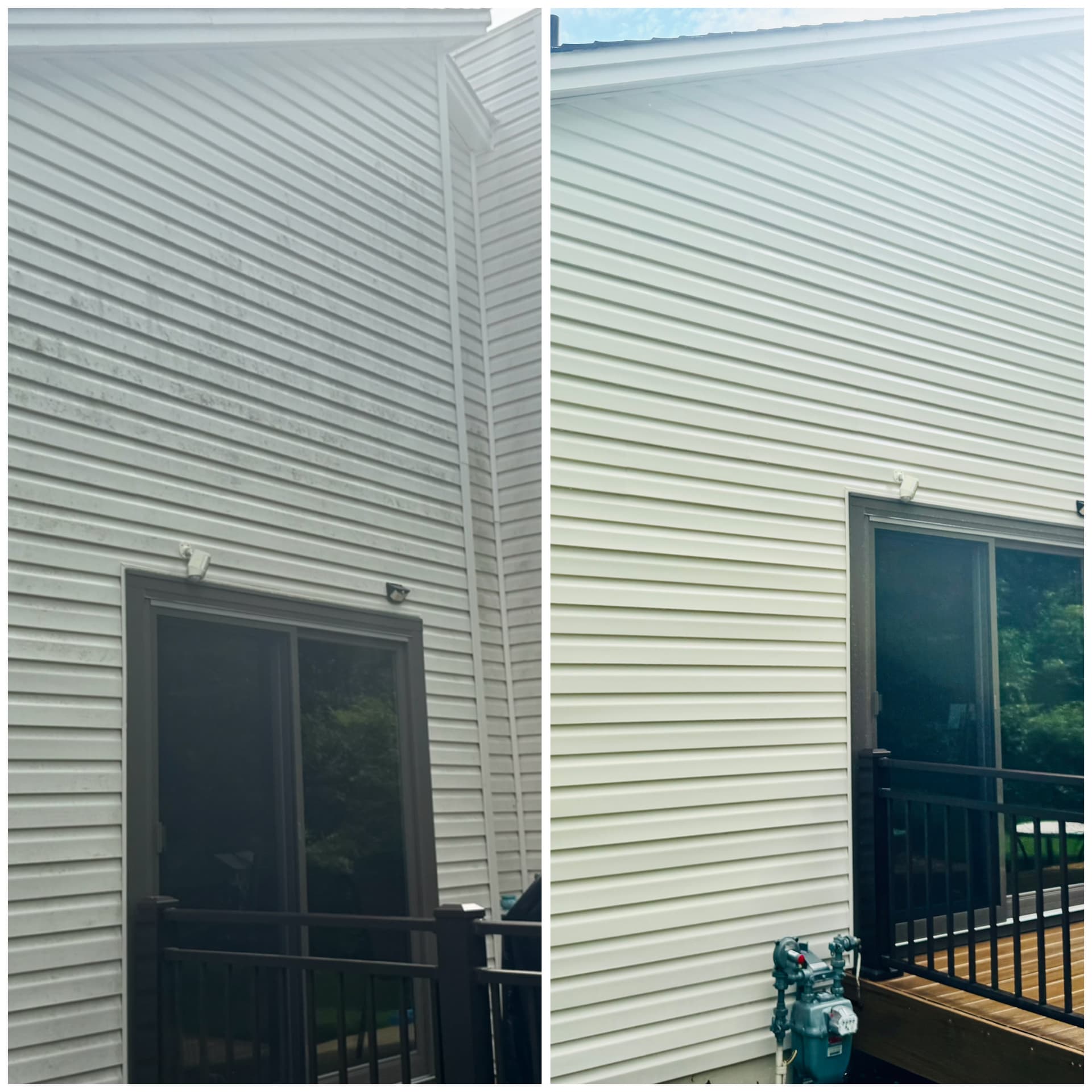
Vinyl siding has a way of slowly collecting grime without you realizing it. Algae, mold, and general dirt build up over time - especially on the upper panels where water tends to sit. By the time it's obvious, the siding has usually been sitting like that for a while.
That's exactly what we were working with here. The streaking and discoloration running down the siding was classic algae growth. Nothing catastrophic, but definitely the kind of buildup that makes a home look older and more worn than it actually is.
This is where soft washing does its job. Instead of blasting the surface with high pressure - which can crack vinyl, push water behind the panels, and void warranties - soft washing uses low pressure and a biodegradable cleaning solution that gets into the surface and actually kills what's growing there. The result holds up longer than pressure washing alone because you're treating the source, not just rinsing it.
The siding on this home came out clean and uniform from top to bottom. No streaking, no leftover residue. That consistent, fresh look across the entire surface is what soft washing done right actually looks like. The upper gable sections and second-story panels are some of the hardest areas to clean effectively, so getting those right matters.
Homes pick up a year's worth of organic buildup faster than most people expect - especially heading into the warmer months when humidity encourages growth. A soft wash is one of the most straightforward ways to keep that from getting ahead of you.